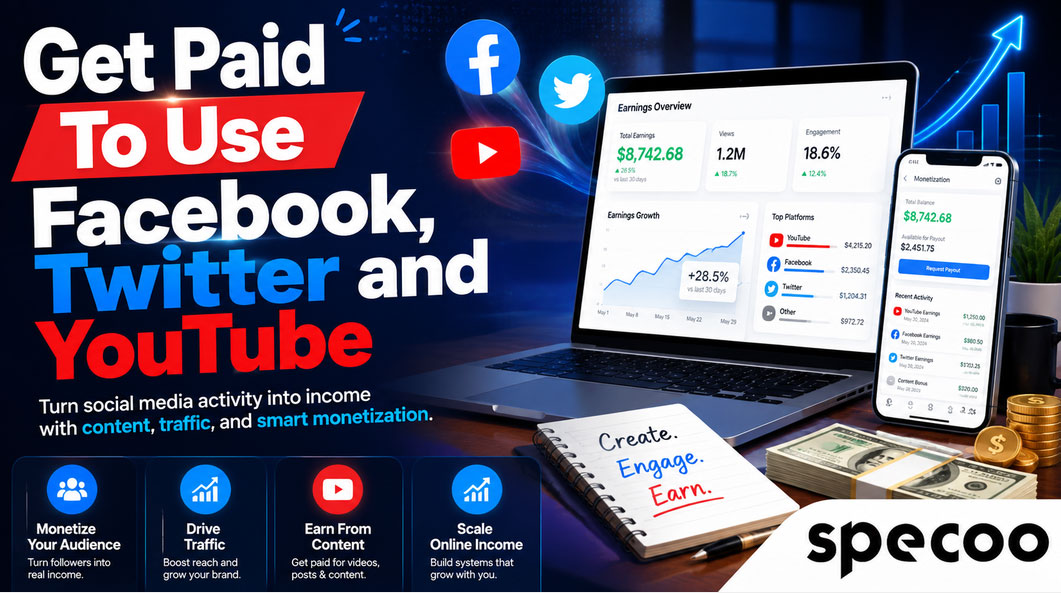
Get Paid To Use Facebook, Twitter, and YouTube: The Real Story Behind Social Media Income
- specoo
- September 1, 2026
- Affiliate Marketing
Social media used to be something you did during a coffee break. Now, for a growing number of people, it’s something they get paid for. The shift didn’t happen overnight, but it happened fast enough that most people still think of Facebook, Twitter (now X), and YouTube purely as places to kill time — not as places to build income.
That perception is outdated. Brands, agencies, and platforms themselves have poured billions of dollars into creator economies over the past several years, and a meaningful slice of that money is landing in the pockets of ordinary users, not just verified celebrities with seven-figure followings. This piece breaks down exactly how that money moves, what’s realistic to expect, and where a structured training resource — like Paying Social Media Jobs — can shorten the learning curve for someone starting from zero.
The Shift: From Scrolling to Earning
The story of “getting paid to use social media” really starts with a simple economic truth: attention is valuable, and platforms need people to keep generating it. Facebook, Twitter, and YouTube don’t produce content themselves — their users do. As competition between platforms intensified, each one had to find ways to keep creators from jumping ship to a rival app. The answer, again and again, was money: ad-revenue sharing, subscription tools, tipping features, and marketplaces that connect brands with everyday users who have engaged audiences.
At the same time, a parallel economy grew up around these platforms. Small businesses that don’t have time to manage their own Facebook page or Twitter presence started hiring freelancers to do it for them. Affiliate marketers realized that a well-placed link in a YouTube description could generate steady commissions. None of this required a talent agent or a marketing degree — it required knowing where to look and how the systems actually work.
That’s the gap most people are stuck in. They know money is being made on these platforms. They just don’t know the mechanics.
How Facebook Pays Real People for Real Engagement
Facebook remains the largest social platform in the world by active users, and it has quietly built one of the more diverse monetization ecosystems around.
Sponsored Posts and Brand Deals
The most direct route is brand partnership. Businesses — from local shops to national retailers — regularly pay individuals with engaged Facebook audiences to post about products or services. This doesn’t require millions of followers. Micro-influencers with a few thousand highly engaged local followers are often more valuable to small businesses than a huge but generic audience, because their recommendations feel personal and trustworthy.
Facebook Stars and Live Gifting
Facebook’s Stars program lets viewers send virtual gifts during Live videos, which convert directly into real payouts for the creator. Gamers, hobbyists, and even people simply hosting Q&A sessions have used this feature to build a modest but steady income stream.
Paid Groups and Exclusive Communities
Facebook Groups can be gated behind a subscription. Coaches, educators, and niche community builders charge monthly fees for access to exclusive content, direct interaction, or specialized advice. This model rewards consistency and expertise more than raw follower count.
Affiliate Marketing on Facebook
Sharing product links — whether through a personal page, a group, or a Facebook Shop — remains one of the simplest ways to earn a commission without needing Facebook’s direct approval for any special program.
Twitter (X) Monetization Explained
Twitter’s evolution into X brought a wave of new monetization tools, some of which are more accessible than people assume.
Subscriptions and Creator Revenue Sharing
X offers subscription tools that let creators charge followers for premium content or extra interaction, with the platform taking a cut and the creator keeping the rest. There’s also an ad-revenue-sharing program that pays eligible creators based on engagement from verified subscribers who see ads on their content.
Ticketed Spaces
Live audio conversations, known as Spaces, can be ticketed — meaning listeners pay to join. This has become a niche but real income source for creators who host recurring discussions, interviews, or educational sessions.
Tips
A more informal but still legitimate route: X’s built-in tipping feature lets followers send money directly, no different in spirit from a digital tip jar.
Affiliate and Sponsored Tweets
Just like Facebook, brands pay for sponsored tweets from accounts with relevant, engaged followings. Affiliate links embedded in threads or replies also generate commission income when they lead to a sale.
YouTube: Where Watching Becomes Working
YouTube has arguably the most mature monetization system of the three platforms, largely because video ads are simply worth more than most other ad formats.
The YouTube Partner Program
Once a channel meets the subscriber and watch-hour thresholds, it becomes eligible for ad revenue sharing. This is the foundation most people think of first, but it’s far from the only option.
Channel Memberships and Super Chat
Viewers can pay a recurring fee for member-only perks, or send money directly during a livestream through Super Chat and Super Thanks. These tools reward creators who build genuine community rather than just chasing views.
Affiliate Marketing Through Video
Product reviews, tutorials, and “what’s in my bag”-style content are affiliate marketing gold. A single well-ranked video can generate commissions for years after it’s published, long after the initial time investment.
Freelance Channel Management
Not every YouTube-related income stream requires running your own channel. Businesses regularly hire people to manage uploads, write descriptions, research keywords, and handle community replies for their YouTube presence — a role that pays hourly or on retainer.
The Skills Gap Nobody Talks About
Here’s the part most “get rich on social media” content skips over: none of these income streams are automatic. Platforms don’t pay people for merely having an account. They pay for engagement, consistency, and — increasingly — for demonstrable skill in things like copywriting, basic video editing, audience research, and knowing how each platform’s algorithm rewards certain behaviors.
This is exactly the gap that trips up beginners. Someone might know that YouTube pays creators, but not know how to structure a video description for search visibility. Someone might know Facebook Groups can be monetized, but not know how to price a membership or retain paying members past month one. The tools exist. The knowledge to use them well is what’s missing — and that’s a solvable problem, not an unlimited barrier.
Where a Structured Program Fits In
This is where a step-by-step training resource earns its place. Rather than piecing together scattered blog posts and outdated YouTube tutorials, a dedicated program condenses the process into an ordered sequence: how to position a profile, where to find businesses actively looking to pay for social media help, how to pitch without sounding like a stranger cold-emailing a company, and how to price services fairly for the market.
Paying Social Media Jobs is one such program, and it’s been active on ClickBank’s marketplace for well over a decade — a notable detail in an industry where most “make money online” products disappear within a year or two. Longevity alone doesn’t guarantee results for any individual buyer, but it does suggest the material has held up well enough for affiliates and customers to keep coming back to it.
A quick note on transparency: the link above is an affiliate link. If you make a purchase through it, this article may earn a commission at no extra cost to you. That’s disclosed here in the interest of the same honesty this piece is asking platforms and programs to practice with their own audiences.
What This Kind of Program Typically Teaches
Programs in this category generally walk through a similar core curriculum, adapted to whichever platform the student wants to focus on first:
- Finding paying opportunities — identifying small businesses, local shops, and online sellers who need help with their social presence but don’t have in-house staff for it.
- Positioning yourself professionally — even without prior marketing experience, presenting a profile and a pitch that signals competence.
- Basic content strategy — understanding posting frequency, engagement tactics, and what kind of content actually performs on each platform.
- Pricing and negotiation — knowing what to charge for social media management, sponsored content, or affiliate promotion so the work is sustainable.
- Scaling beyond one client or one platform — turning a first small gig into a repeatable process across Facebook, Twitter, and YouTube simultaneously.
None of this is exotic information. It’s the kind of practical, job-market knowledge that used to require a marketing internship to pick up. What a structured course does is compress the trial-and-error most people go through on their own into a shorter, guided path.
Realistic Expectations: What This Path Is and Isn’t
It’s worth being direct here. Getting paid to use Facebook, Twitter, and YouTube is not a lottery ticket, and anyone promising guaranteed, specific dollar amounts without knowing your effort level, niche, or market is overselling. What’s realistic is this: platforms and businesses are actively paying people for social media skills right now, the barrier to entry is lower than most traditional jobs, and the income potential scales with the time and consistency someone puts in.
This isn’t a “get rich quick” scheme, and treating it as one is the fastest way to quit before results show up. Early income is often modest — a single client, a first small sponsored post, a first month of ad revenue that barely covers a phone bill. The people who eventually earn a meaningful side income, or replace a full-time job, are almost always the ones who treated the first few months as skill-building rather than instant payoff.
Getting Started: A Practical First Path
For someone starting from nothing, the order of operations matters more than which platform gets chosen first.
- Pick one platform to focus on initially. Trying to build a presence on Facebook, Twitter, and YouTube simultaneously from day one usually leads to mediocre results everywhere instead of solid results anywhere.
- Study what already performs well in your intended niche. Before posting anything, spend real time studying accounts and channels that are already succeeding in the space you’re targeting.
- Build a small but real body of content or engagement history. Businesses and platforms alike want to see some evidence of consistency before they hand over money.
- Learn the platform’s specific monetization requirements. YouTube’s Partner Program thresholds, X’s creator revenue-sharing eligibility, and Facebook’s Stars requirements all differ — know the exact numbers before assuming you qualify.
- Start pitching or applying once the groundwork is visible. Whether that’s applying for YouTube monetization, pitching a local business for social management, or joining an affiliate program, the pitch is stronger once there’s something to point to.
- Reinvest early earnings into better tools or further learning. A modest upgrade in editing software, a paid course, or better research tools tends to compound results faster than trying to do everything for free indefinitely.
Trusted Resources Worth Bookmarking
Anyone serious about this path should go straight to the source material the platforms themselves publish, rather than relying solely on secondhand advice:
- YouTube Creator Academy — free official training on monetization, audience growth, and content strategy directly from YouTube.
- Meta for Creators — Meta’s own hub for Facebook and Instagram monetization tools, requirements, and updates.
- X Help Center: Monetization — the official breakdown of eligibility and payout structures for X’s creator programs.
- ClickBank Marketplace — where structured training programs like Paying Social Media Jobs are listed, reviewed by gravity score, and vetted by affiliate performance.
- FTC Endorsement Guides — essential reading before accepting any sponsored deal, since undisclosed paid promotion carries real legal risk.
- Upwork — a practical starting point for finding businesses that already need freelance social media help.
Bookmarking the platforms’ own documentation matters because monetization rules change often — eligibility thresholds, payout percentages, and program names shift as platforms compete for creators. A course can teach strategy; the platforms’ own pages are the final word on current rules.
The Honest Bottom Line
Facebook, Twitter, and YouTube have all built real, functioning economies around the time people spend on them. That’s not hype — it’s a structural fact of how these platforms now operate, and it’s been true for years even if mainstream awareness of it is only catching up now. The opportunity is genuine, but so is the learning curve. People who succeed at turning social media time into income are, almost without exception, the ones who treated it like a skill worth developing rather than a switch to flip on.
For someone who wants a guided, structured version of that learning curve instead of assembling it themselves from scattered sources, Paying Social Media Jobs offers a condensed, step-by-step path built specifically around this shift — helping people turn ordinary time spent on Facebook, Twitter, and YouTube into a legitimate, if gradually built, source of income.
The scroll was always going to be worth something to somebody. The only real question left is whether it’s going to be worth something to you.
Related Posts